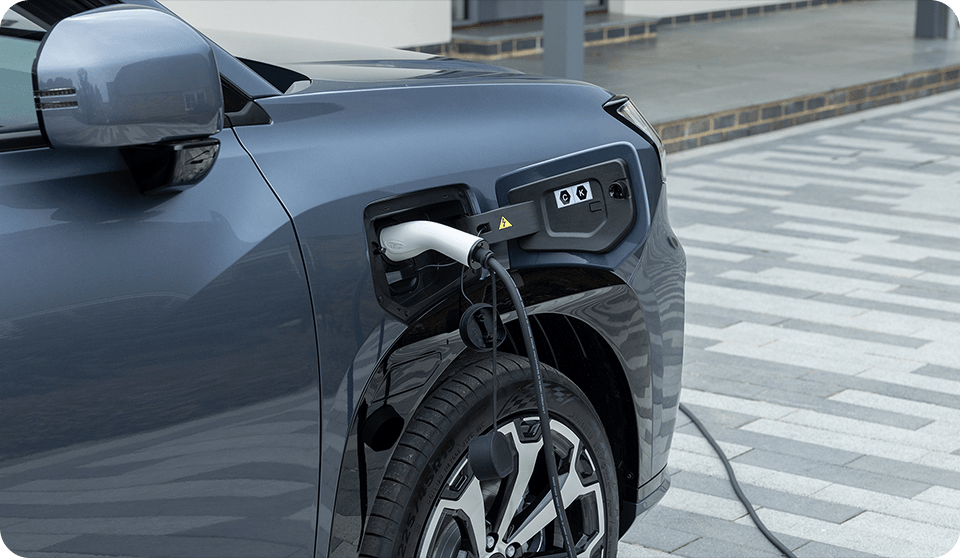
Charging your electric car at home is one of the most cost-effective ways to power it. With prices starting at just 2-3p per mile*, home charging offers convenience, control and significantly lower running costs.
In this article:
What makes charging at home cost-effective?
Home charging gives you more control over your electricity rates and charging times, helping you keep charging costs to a minimum.
If you use an off-peak tariff for example, you could pay as little as 2-3p per mile, meaning a 100 mile journey would cost around £3.
Some electricity suppliers have special EV charging tariffs that can significantly lower costs too. Plus, if your home has solar panels you could use the sun’s energy to charge your car.
Average home charging costs
You can work out how much it costs to charge an electric car at home by multiplying the size of the battery in kilowatt-hours (kWh) by the price of your electricity.
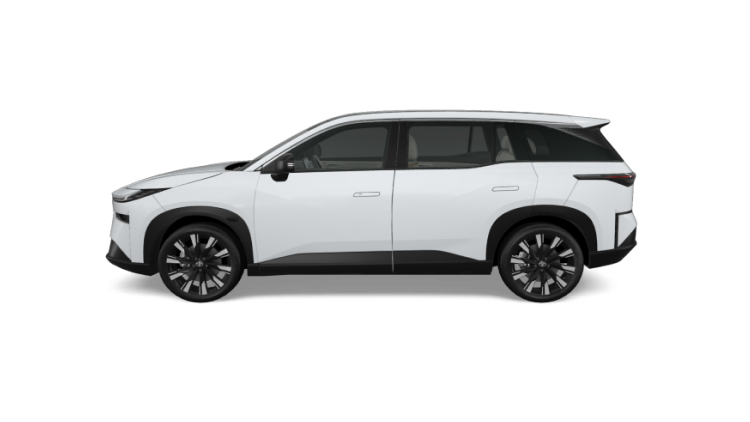
So for the AION V, which has a 75kWh battery, on a 26 pence per kWh electricity tariff, the cost to fully charge the battery would be:
75kWh x 26p/kWh = £19.50
Compared to a full tank of petrol or diesel, that’s quite the saving, as you can see by the table below.
Efficiency based on assumed 40mpg. Prices sourced from UK Government Fuel Finder data, correct as of May 2026.
If you’d like to see a more thorough comparison of the costs, we’ve already taken a closer look.
Home charging Vs public charging
Needing to charge your EV away from home isn’t a big deal these days, as new public chargers are appearing all the time. You may find that some businesses or workplaces offer discounted, or even free charging. However, public chargers tends to be more expensive.
The benefit of public chargers is that they can offer rapid, or ultra-rapid charging speeds, capable of getting your battery to 80% charge in a matter of minutes. As a rule of thumb, the faster the charger is the more expensive it will be.
How much do public charging stations cost?
Prices can vary widely, but you can expect to pay anywhere between 51p to 87p per kWh. Rapid and ultra-rapid chargers tend to be more expensive than slower ones, but come with the convenience of speed.
Obviously, you don’t have to charge your battery completely when you visit a public charger – you could just add a few miles to help reach your destination.
Can I reduce home charging costs?
As mentioned earlier, lots of things can affect the cost of charging, with rates tending to vary with your supplier, tariff type and the time of day you use energy. It’s worth remembering that you won’t always be charging from empty each time – regular small top ups mean you might use less energy than you think.
Getting a dedicated home charger can help too. They don’t just make it easier to plug-in, they’re often filled with tech designed to optimise charging sessions by integrating with your energy tariff. They’re likely to come with an app that helps make managing your charging easier too.
Crunching the numbers
- Home charging is the cheapest way to run an EV – with costs as low as 2–3p per mile.
- Public charging can be more expensive – although they offer the benefit of much faster charging speeds.
- EVs are still cheaper to run that conventional cars – petrol or diesel will always be more expensive.
- You can reduce home charging costs – most energy suppliers have off-peak or EV-specific tariffs, solar energy can help and smart home chargers can optimise charging.