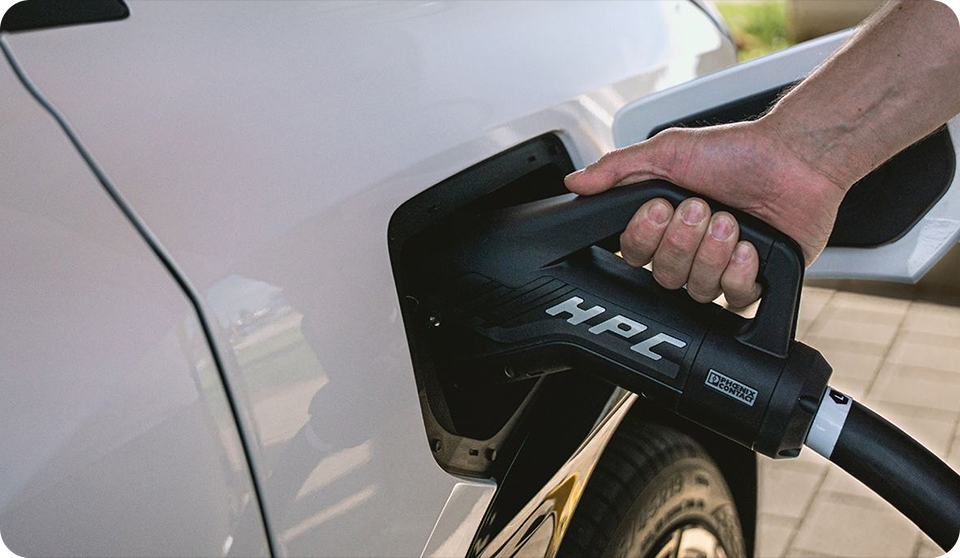
Data provided by Zap-Map shows there are already over 118,000 public EV chargers across more than 45,000 locations in the UK – that’s twice as many as there are petrol pumps – with the number growing rapidly. If you’ve ever wondered how it all works, we take a closer look here.
On longer trips, or if you aren’t able to charge an EV at home, you’ll need to use public chargers. There are many different Charge Point Operators who run these, from big names like Shell to smaller regional installers. While they’re usually more expensive than charging at home, an EV can still be much cheaper to run than a petrol or diesel car. You can also find many places that offer free EV charging.
In this article:
The three types of public EV charger
From supermarkets to service stations, you’re never far from public EV charging. But not all chargers are the same. There are three types to look out for: rapid or ultra-rapid, fast and slow, with the difference being the amount of power they supply (measured in kW).
Rapid and Ultra-rapid chargers. These are designed to deliver lots of electricity to your battery in as short a time as possible, providing from 50kW to over 150kW. The very fastest, usually found in motorway service stations, can charge an EV in as little as 10 minutes.
Standard Plus chargers. Operating between 7kW and 49kW, fast chargers are the most common type found on public networks. They’re similar to the ones you see on some homes, though often faster than domestic versions.
Standard chargers. Becoming increasingly outdated, standard chargers deliver below 7kW. As they transfer less power, these take the longest to charge.
How much does it cost to use public EV charging?
At most chargers you can pay with a contactless card. Many networks have their own app, which you can use to start or stop charging and pay for the energy you’ve used.
There are also several apps that let you check the location of chargers and the network running them. This can be handy for planning longer journeys, or when you’re going somewhere new.
Some operators offer a subscription service too, which gives cheaper rates for a flat monthly fee. You could find this useful if you regularly use the same network.
Comparing public charging costs with petrol
Using a public Standard Plus charger costs approximately 16-23p per mile, driving at standard efficiency. Rapid and ultra rapid chargers are more expensive.
While petrol price and driving efficiently vary significantly, a petrol car using fuel at £1.50 a litre and averaging 40 miles per gallon would cost around 17p per mile to drive.
How to reduce public charging costs
Plan your journeys. You can use apps to locate EV charge points and see their prices along your route or at your destination. Some charging networks are cheaper than others, so it pays to shop around.
Try to charge during off-peak times. You’ll avoid queues and potentially take advantage of lower rates.
Avoid ultra rapid chargers unless necessary. Combining a charging stop with a snack break means the extra time for a slower charge will save money without being an inconvenience.
Charge only what you need. You don’t always need to hit 100% charge. You may be able to add a little power to get you too somewhere cheaper.
Is there anywhere you can charge an electric car for free?
There are lots of places that offer free EV charging, if you know where to look. Many supermarkets have this service, but you can also find free charging at tourist attractions, leisure centres and hotels.
Apps like Zap-Map can show you where free chargers are located.
Using public charging like a pro
- Charging is widely available from various operators – while typically more expensive than home charging, public charging can still be cheaper than petrol or diesel.
- There are three main charger types – faster chargers offering shorter wait times but higher prices.
- Payment is usually via contactless – you could get extra savings with the provider’s app.
- Savings are possible with a little planning – this will become second nature before you know it.
- Free public charging is available – many places offer free charging, although it is likely to be at slower speeds.